irmão
Old Galician-Portuguese
Alternative forms
Etymology
Inherited from Latin germānus (“brother”), from the adjective germānus (“of true siblings”), itself from germen (“sprout, bud”), from Proto-Indo-European *ǵénh₁mn̥ (“offspring, seed”), from *ǵenh₁- (“to beget, to give birth”). Cognate with Old Leonese and Old Spanish ermano.
Pronunciation
- IPA(key): /iɾˈmã.u/
Noun
irmão m (plural irmãos, feminine irmãa, feminine plural irmãas)
- brother
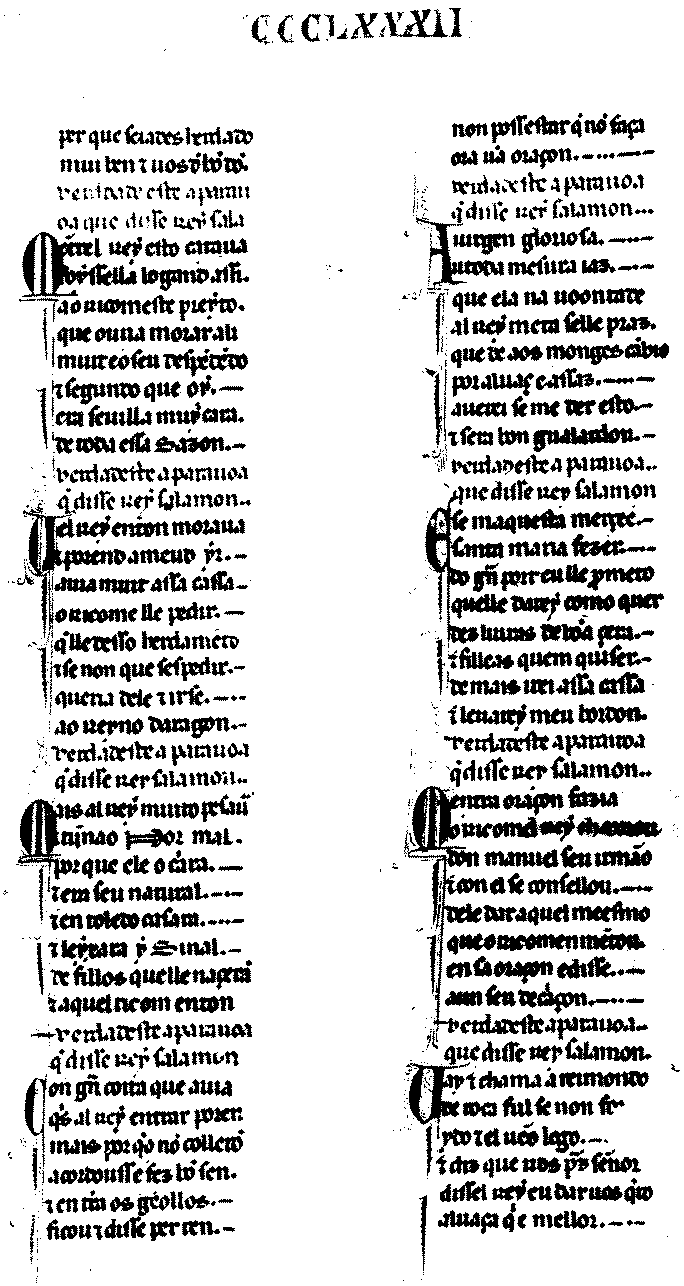
- a. 1284, Alfonso X of Castile, Cantigas de Santa Maria, Códice de los músicos, cantiga 382 (facsimile):
- […] el rey chamou / don manuel ſeu irmão
- […] the King called his brother Don Manuel
- sibling
Related terms
Descendants
- Galician: irmán, ermao, irmao, hermao (Eonavian)
- Portuguese: irmão (see there for further descendants)
Further reading
- Ferreiro, Manuel (2014–2025), “irmão”, in Universo Cantigas: edición crítica da poesía medieval galego-portuguesa [Universo Cantigas: critical edition of Galician-Portuguese medieval poetry] (in Galician), A Coruña: University of A Coruña, →ISSN
- Seoane, Ernesto Xosé González; Granja, María Álvarez de la; Agrelo, Ana Isabel Boullón (2006–2022), “irmão”, in Dicionario de Dicionarios do galego medieval [Dictionary of dictionaries of Medieval Galician] (in Galician), Santiago de Compostela: Instituto da Lingua Galega
- Barreiro, Xavier Varela; Guinovart, Xavier Gómez (2006–2018), “irmão”, in Corpus Xelmírez: corpus lingüístico da Galicia medieval [Corpus Xelmírez: linguistic corpus of Medieval Galicia] (in Galician), Santiago de Compostela: Instituto da Lingua Galega
- Barreiro, Xavier Varela; Guinovart, Xavier Gómez (2006–2018), “irmao”, in Corpus Xelmírez: corpus lingüístico da Galicia medieval [Corpus Xelmírez: linguistic corpus of Medieval Galicia] (in Galician), Santiago de Compostela: Instituto da Lingua Galega
Portuguese
Alternative forms
Etymology
Inherited from Old Galician-Portuguese irmão (“brother”), from Latin germānus (“brother”), from the adjective germānus (“of true siblings”), from germen (“sprout, bud”), from Proto-Indo-European *ǵénh₁mn̥ (“offspring, seed”), from *ǵenh₁- (“to beget, to give birth”). Cognates include Galician irmán, Mirandese armano, Asturian hermanu, and Spanish hermano. Doublet of germano, a learned borrowing, and hermano, a borrowing from Spanish.
Pronunciation
- (Brazil) IPA(key): /iʁˈmɐ̃w̃/ [iɦˈmɐ̃ʊ̯̃]
- (São Paulo) IPA(key): /iɾˈmɐ̃w̃/ [iɾˈmɐ̃ʊ̯̃]
- (Rio de Janeiro) IPA(key): /iʁˈmɐ̃w̃/ [iʁˈmɐ̃ʊ̯̃]
- (Southern Brazil) IPA(key): /iɻˈmɐ̃w̃/ [iɻˈmɐ̃ʊ̯̃]
- (Portugal) IPA(key): /iɾˈmɐ̃w̃/
Noun
irmão m (plural irmãos, feminine irmã, feminine plural irmãs)
- brother (male sibling)
- sibling (person having the same parents as another)
- Eu tenho quatro irmãos: dois irmãos e duas irmãs.
- I have four siblings: two brothers and two sisters.
- brother (member of a brotherhood)
- Irmão Maynard, leia o primeiro versículo do Livro dos Armamentos.
- Brother Maynard, read the first verse from the Book of Armaments.
- brother; bro (close friend)
- Synonyms: bróder, camarada, amigo do peito
- Esse cara aqui é meu irmão, comigo para o que der e vier.
- This guy here is my brother, with me through ups and downs.
Derived terms
- (augmentative) irmãozão
- irmãozinho (diminutive)
Related terms
Descendants
- Kabuverdianu: armum, armun, irma, irmon
- Papiamentu: ruman
- → Japanese: イルマン (iruman)
- → Konkani: इर्मांव (irmā̃v)
See also
Further reading
- “irmão”, in Dicionário Priberam da Língua Portuguesa (in Portuguese), Lisbon: Priberam, 2008–2025