fredom
Middle English
Alternative forms
- fredam, fredome
- ffredom, freedom, freedome (Late Middle English)
- freodom (Early Middle English); vridom (Kent)
Etymology
Inherited from Old English frēodōm, from Proto-West Germanic *frijadōm; equivalent to fre + -dom.
Pronunciation
- IPA(key): /ˈfreːdoːm/
- IPA(key): /ˈvrøːdoːm/ (West Midland)
- IPA(key): /ˈfreːdum/, /ˈfreːdam/ (with reduction)
Noun
fredom (plural fredomes)
- freedom, liberty
- c. 1375, “Book I”, in Iohne Barbour, De geſtis bellis et uirtutibus domini Roberti de Brwyß […] (The Brus, Advocates MS. 19.2.2)[1], Ouchtirmunſye: Iohannes Ramſay, published 1489, folio 2, recto, lines 225-228; republished at Edinburgh: National Library of Scotland, c. 2010:
- A fredome is a noble thing / fredome mayß man to haiff liking / fredome all ſolace to ma[n] giffis / He levys at eß [that] frely levys
- Oh, freedom is a noble thing: / it allows people to get enjoyment / and provides all of humanity's peace. / If you live free, you live at ease!
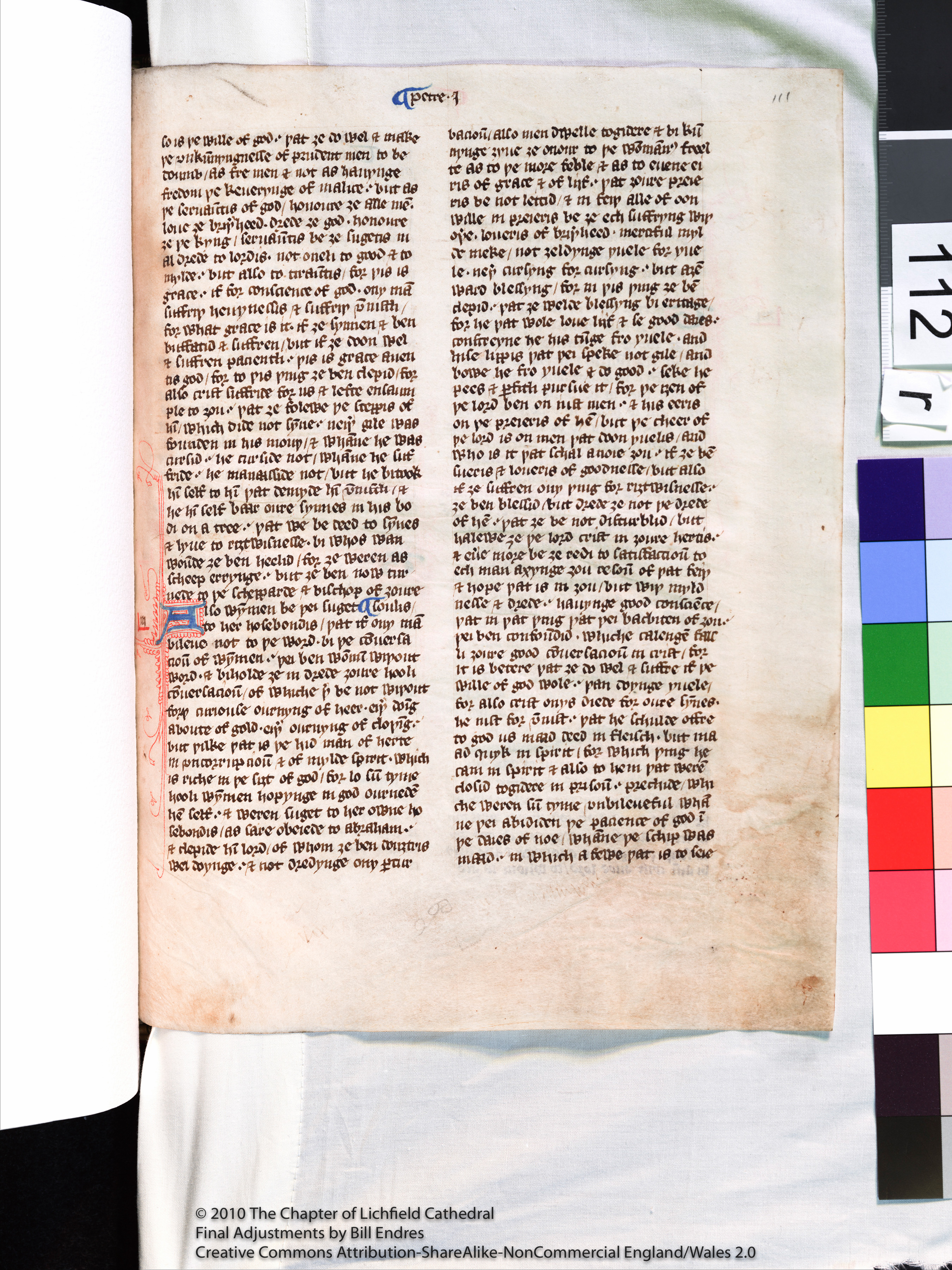
- c. 1395, John Wycliffe, John Purvey [et al.], transl., Bible (Wycliffite Bible (later version), MS Lich 10.)[2], published c. 1410, Petre ·i· 2:16, page 112r, column 1; republished as Wycliffe's translation of the New Testament, Lichfield: Bill Endres, 2010:
- As fre men not as hauynge fredom þe keuerynge of malice .· but as the ſeruaũtis of god
- [Live] as freemen, not in using freedom as an excuse for wrongdoing, but as servants of God.
- nationhood, independence
- free action, free will
- generosity, charitableness
- right, privilege (or a set of them)
- authority, freedom to act
Descendants
References
- “frẹ̄dọ̄̆m, n.”, in MED Online, Ann Arbor, Mich.: University of Michigan, 2007, retrieved 24 March 2018.